-1.jpg?width=275&height=183&name=download%20(5)-1.jpg)
Kris Gopalakrishnan biography
Kris Gopalakrishnan
Kris Gopalakrishnan Infosys
.jpg?width=275&height=183&name=images%20(6).jpg)

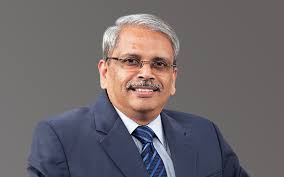
India's future as a technology superpower hangs in the balance. As artificial intelligence fundamentally reshapes global economic dynamics, the nation must choose between leading innovation or following others. Guiding this critical conversation is Kris Gopalakrishnan, whose profound experience creating world-class technology enterprises provides the strategic blueprint India needs to dominate the AI era.
The remarkable journey of Kris Gopalakrishnan represents India's technological metamorphosis. When seven entrepreneurs pooled their meager resources in 1981 to launch Infosys, they faced skepticism from every quarter. Starting from Pune with $250 borrowed capital and facing infrastructure challenges that would discourage most, these founders demonstrated that Indian ingenuity could compete globally.
The leadership legacy of Kris Gopalakrishnan extends beyond entrepreneurial success. His executive tenure as Chief Executive Officer between 2007 and 2011, complemented by his Vice Chairman responsibilities, witnessed Infosys navigating critical transformation phases, technology evolution, and global market penetration. His leadership paradigm integrated technical mastery with strategic business intelligence, creating replicable frameworks for scaling technology companies while preserving innovation culture and operational quality.
Through multiple public platforms, Kris Gopalakrishnan has championed a decisive argument: India's artificial intelligence achievements will correlate directly with research and development investments. This represents more than theoretical positioning—it reflects hard-won understanding differentiating technology consumers from technology creators.
India's current R&D allocation hovers below 1% of GDP, positioning it significantly behind innovation powerhouses like South Korea, Israel, or the United States. This chronic underinvestment creates tangible consequences. While Indian engineers earn global recognition for technical prowess, the nation generates comparatively fewer patents, breakthrough algorithms, or foundational technologies relative to its capabilities.
Addressing industry gatherings, Kris Gopalakrishnan has underscored that the artificial intelligence era demands fundamentally different approaches than the IT services expansion. The IT revolution succeeded on India's execution capabilities—delivering software projects punctually, within budget, and maintaining high quality. The AI revolution, however, rewards those creating foundational technologies, developing breakthrough algorithms, and building platform innovations others utilize.
Among the most powerful and distinctive elements within the framework presented by Kris Gopalakrishnan is his unwavering commitment to building technology centered on empathy. In an environment where AI discussions frequently emphasize efficiency improvements and cost reductions, his human-centered methodology provides refreshing perspective.
Empathy-driven AI manifests in concrete applications. It means engineering AI solutions addressing India's most critical challenges—not purely because they generate commercial returns, but because they can transform millions of lives. It means developing AI-powered healthcare diagnostics functioning in rural clinics facing intermittent electricity and limited connectivity. It means constructing agricultural AI communicating in languages farmers actually speak and addressing problems they genuinely face, not problems Silicon Valley presumes they encounter.
India's healthcare infrastructure confronts distinctive challenges making it an optimal environment for empathy-centered AI innovation. With physician-to-patient ratios substantially below international benchmarks and enormous geographical healthcare access disparities, AI could bridge essential gaps. The vision from Kris Gopalakrishnan encompasses AI systems delivering preliminary diagnoses, triaging patients, and providing health guidance across multiple Indian languages, making quality healthcare counsel accessible even in remote villages.
India's agricultural landscape, dominated by small and marginal cultivators, urgently requires technological solutions respecting its unique characteristics. The technology advocacy of Kris Gopalakrishnan for empathy-centered approaches means AI tools acknowledging small plot dimensions, limited capital availability, diverse cropping systems, and indigenous knowledge frameworks. These represent more than technical obstacles—they're design challenges demanding profound understanding of users' lived realities.
India's educational obstacles—spanning basic literacy through advanced skill cultivation—present tremendous opportunities for AI innovation. AI-powered tutoring platforms adapting to individual learning preferences, language translation tools making educational resources accessible in regional languages, and skill assessment frameworks identifying aptitudes while matching learners with opportunities—these constitute empathy-driven innovations capable of transforming countless lives.
A persistent theme throughout the messaging from Kris Gopalakrishnan emphasizes urgently transforming Indian universities from teaching-focused establishments into innovation factories. This transformation proves critical because universities occupy the nexus of talent, intellectual curiosity, and long-term perspective—the fundamental ingredients for breakthrough research.
Contemporary Indian universities confront multiple obstacles. Faculty members frequently bear overwhelming teaching burdens, leaving minimal time for research activities. Infrastructure supporting cutting-edge research remains limited. Industry-academia collaboration stays weak. Incentive structures reward academic journal publications but provide inadequate support for commercializing research or launching startups.
The transformation envisioned by Kris Gopalakrishnan would fundamentally change this landscape. Universities should become environments where faculty members balance teaching with research, where doctoral candidates tackle industry-submitted problems, where entrepreneurship receives celebration equal to academic publishing, and where successful startups emerge regularly from research laboratories.
Progressive institutions like JGU are pioneering these innovative models, but national scaling demands policy modifications, funding commitments, and cultural transformations in measuring academic achievement.
At university ceremonies and youth platforms, Kris Gopalakrishnan consistently communicates messages combining inspiration with pragmatic wisdom. He encourages young Indians considering unconventional career trajectories, viewing problems as opportunities, and embracing failure possibilities as integral to innovation journeys.
His messaging resonates because it originates from authentic experience. Infosys itself emerged from failure—the founders' initial business venture didn't succeed. But they absorbed lessons, adapted strategies, and ultimately constructed something far greater. This authenticity elevates his encouragement beyond motivational speaking—it provides a roadmap grounded in actual experience.
While Kris Gopalakrishnan constructed his career within private enterprise, he acknowledges that government policy performs critical enabling or obstructing roles determining whether India succeeds in AI. Government cannot directly build exceptional AI companies, but it can establish conditions where they flourish—or fail to emerge.
Among government's most valuable contributions is financing foundational research—the long-term, curiosity-driven investigation potentially lacking immediate commercial applications but creating knowledge foundations for future innovations. Private corporations, focused on quarterly performance and shareholder returns, typically underinvest in foundational research.
AI development demands massive computational resources. Training large language models or computer vision systems requires thousands of GPUs operating for weeks or months. Currently, most Indian AI researchers and startups depend on cloud computing resources from American corporations like Amazon, Google, or Microsoft. This creates both cost obstacles and potential sovereignty concerns.
AI raises unprecedented questions about privacy, bias, accountability, and transparency. Clear regulatory guidelines provide certainty for businesses making long-term investments while protecting citizens from potential damages. The balanced methodology championed by Kris Gopalakrishnan recognizes that regulation can facilitate innovation by providing clarity, not merely constrain it through restrictions.
Having constructed one of India's most accomplished IT services corporations, Kris Gopalakrishnan understands both strengths and constraints of that business paradigm. IT services companies achieved success delivering high-quality work at competitive prices, but they fundamentally executed others' visions rather than creating their own breakthrough innovations.
For Indian corporations succeeding in AI, they must navigate the often uncomfortable transition from services to products—from executing client projects to constructing their own platforms, algorithms, and solutions. This demands different capabilities, different risk tolerances, and most critically, sustained R&D investment even when payoffs remain uncertain.
The perspective from Kris Gopalakrishnan emphasizes that corporations shouldn't perceive universities merely as employable graduate sources but as potential research collaborators. Corporations can finance specific research initiatives, sponsor doctoral student fellowships, provide faculty sabbaticals addressing industry problems, and establish clear pathways commercializing university research.
While large corporations possess resources, startups provide agility and risk appetite. The observations from Kris Gopalakrishnan highlight that AI startups confront distinctive challenges—they require patient capital accepting multi-year return horizons, access to expensive computing infrastructure, and talent willing to forgo established company security for startup uncertainty.
Creating flourishing AI startup ecosystems requires more than financing alone. It needs experienced mentors who've constructed companies previously, accelerators understanding AI-specific challenges, and cultures celebrating entrepreneurship while treating failure as learning experiences rather than career-ending stigmas.
The journey Kris Gopalakrishnan undertook constructing Infosys provides invaluable lessons for contemporary AI entrepreneurs:
Quality as Competitive Weapon: Infosys didn't compete primarily on cost—it competed on quality and dependability. In AI, this translates to constructing systems that are not merely technically sophisticated but also robust, equitable, and transparent.
Values Foundation: Infosys maintained robust values around integrity and transparency even when shortcuts would have been easier. In AI, where systems can perpetuate biases or compromise privacy, values-driven development proves essential.
Strategic Long-term Perspective: Infosys made investments in training, infrastructure, and capabilities that wouldn't generate returns for years. AI development demands similar patience—breakthrough innovations rarely materialize on quarterly schedules.
While concentrated on India's interests, Kris Gopalakrishnan recognizes that India's AI development carries global ramifications. India's challenges—delivering healthcare to 1.4 billion people, educating hundreds of millions of children, modernizing agriculture while supporting small farmers—are shared throughout much of the developing world.
AI solutions engineered for Indian contexts could revolutionize lives across Africa, Southeast Asia, Latin America, and beyond. This positions India not merely as an AI consumer or even creator, but as a potential AI leader for the Global South—engineering technologies addressing billions' needs rather than exclusively serving the wealthy minority.
The philanthropic initiatives of Kris Gopalakrishnan demonstrate commitment extending beyond business achievement to social transformation. His giving has concentrated on areas where patient capital and long-term thinking can create systemic change—financing foundational research, supporting educational innovation, and improving healthcare accessibility.
This transcends traditional charity alleviating immediate suffering. It represents strategic philanthropy targeting institution building, capability development, and knowledge base expansion that will drive India's development for decades.
While optimistic about India's capabilities, Kris Gopalakrishnan doesn't avoid acknowledging substantial challenges:
Brain Drain: India continues losing exceptional minds to foreign opportunities. Competing with Silicon Valley compensation and research facilities proves difficult, but not impossible if India can provide meaningful work on significant problems.
Infrastructure Deficits: From computing power to research facilities to reliable electricity and internet, infrastructure deficits constrain possibilities. Closing these gaps demands sustained investment over many years.
Cultural Obstacles: Transitioning from service mindset to innovation mindset requires cultural transformation at every level—from students selecting career paths to investors allocating capital to companies defining success.
Implementation Failures: India possesses many sound policies failing in implementation. Bureaucratic delays, corruption, and poor inter-agency coordination can undermine even well-designed initiatives.
Drawing on perspectives from Kris Gopalakrishnan, here's what India must accomplish to realize its AI potential:
The arguments advanced by Kris Gopalakrishnan about AI aren't theoretical—they carry profound implications for India's economic trajectory, geopolitical positioning, and social advancement.
Economic Potential: AI is projected adding trillions to global economies. India can capture significant portions of this value, but only by transitioning from AI consumption to AI creation.
Development Acceleration: AI applications in healthcare, education, agriculture, and governance could help India achieve development objectives faster than any previous technology.
Geopolitical Power: Technology leadership translates to geopolitical influence. AI leaders will establish global standards, norms, and governance frameworks.
Youth Employment: India's demographic advantage—its large, young population—becomes an asset only with quality jobs. AI innovation can generate millions of high-value employment opportunities.
Today, Kris Gopalakrishnan continues shaping India's technology direction through board memberships, policy advocacy, mentorship, and philanthropy. His voice carries authority because it combines technical expertise, business acumen, and proven track record of building at scale.
When he discusses AI, policymakers pay attention. When he invests in educational institutions, it signals which models might succeed. When he mentors entrepreneurs, he shares hard-earned wisdom about what genuinely takes to build enduring companies.
For those constructing AI companies in India, the example established by Kris Gopalakrishnan offers practical direction:
The perspective provided by Kris Gopalakrishnan acknowledges that India's AI journey doesn't occur in isolation. It unfolds in a global context of rapid technological transformation, intense competition, and shared challenges.
India possesses unique advantages—a massive market, diverse use cases, talented engineers, and problems AI can help solve. But it also faces constraints—limited R&D spending, infrastructure gaps, and competition from better-funded rivals.
Success demands playing to India's strengths while systematically addressing weaknesses. It means collaborating globally while building indigenous capabilities. It means competing aggressively in some domains while finding niches where India can lead.
The vision articulated by Kris Gopalakrishnan for India's AI future is ambitious but achievable. It requires sustained investment, policy support, cultural change, and collective efforts of government, industry, academia, and civil society.
Most importantly, it requires believing that India can transcend being a consumer of technologies developed elsewhere—that it can be a creator, an innovator, and a leader in the most transformative technology of our time.
The IT revolution proved what India could achieve when committed to technology. The AI revolution offers an even greater opportunity—not just to build wealth but to solve problems, improve lives, and demonstrate that technology can serve humanity's highest aspirations.
For Policymakers: Increase R&D funding, build infrastructure, create enabling regulations, and support both universities and startups.
For Business Leaders: Invest in R&D, build products not just services, partner with universities, and support the startup ecosystem.
For Academics: Focus on impactful research, collaborate with industry, encourage entrepreneurship, and train students for innovation.
For Entrepreneurs: Solve real problems, build for scale, maintain high standards, and think long-term.
For Students: Develop deep technical skills, embrace interdisciplinary learning, take calculated risks, and believe you can build things that matter.
The message from Kris Gopalakrishnan is clear and urgent: India has a window of opportunity in AI, but that window won't remain open indefinitely. Other nations are investing aggressively, and competitive advantages will accrue to those who move decisively.
India has the talent, the market, and the motivation to succeed in AI. What it needs now is the commitment to invest in research, the willingness to think long-term, the courage to embrace risk, and the conviction that Indian innovation can change the world.
The decisions made in the next few years will shape India's trajectory for decades to come. Will India be an AI leader or an AI follower? The answer depends on whether we heed the wisdom of leaders like Kris Gopalakrishnan who have built the future before and know what it takes to do it again.
Kris Gopalakrishnan is the co-founder of Infosys, one of India's most successful global technology companies. He served as CEO and Vice Chairman, playing a crucial role in India's IT revolution. His insights on AI matter because he has proven experience building world-class technology companies, understands both opportunities and challenges in technology transformation, and has spent decades thinking about how India can compete globally in technology.
The core thesis is that India must dramatically increase investment in AI research and development to move from being a consumer of AI technologies to a creator. Without substantial R&D investment, India risks repeating its IT services pattern—executing projects designed elsewhere rather than creating breakthrough innovations. Success in AI requires building indigenous capabilities through sustained research investment, talent development, and innovation-focused policies.
Empathy-driven AI means developing AI solutions that address genuine human needs and challenges rather than just optimizing for efficiency or profit. For India, this means creating AI applications for affordable healthcare in rural areas, agricultural guidance for small farmers, education in regional languages, and accessible government services—all designed with deep understanding of users' actual circumstances, constraints, and needs.
Universities are critical because they combine young talent, long-term thinking, and research capabilities—essential ingredients for breakthrough innovation. Currently, most Indian universities focus primarily on teaching with limited research and entrepreneurship. Transforming them into innovation engines where research, teaching, and entrepreneurship thrive together is essential for creating the knowledge base, talent, and startups that will drive India's AI leadership.
Government plays multiple critical roles: funding fundamental research that private companies won't fund, building digital and physical infrastructure necessary for AI development, creating clear regulatory frameworks that provide certainty while protecting against harms, supporting university transformation and talent development, and using procurement policies to create initial markets for Indian AI solutions.
Companies must transition from services to products, from executing client projects to building their own platforms and algorithms. This requires dramatically increased R&D investment, tolerance for longer-term payoffs, building academic partnerships, investing in fundamental research, and creating cultures that reward innovation rather than just execution efficiency. The service model was about doing what clients asked; the AI model is about creating technologies clients didn't know were possible.
Major challenges include chronic underinvestment in R&D compared to global competitors, talent migration as top minds leave for foreign opportunities, infrastructure gaps in computing power and research facilities, cultural barriers in shifting from service to innovation mindset, implementation challenges where good policies fail in execution, and competition from countries that have been investing in AI research for much longer.
Building Infosys taught that genuine technology leadership requires owning intellectual property and creating innovations, not just executing projects efficiently. Lessons include the importance of quality over cost competition, long-term thinking over short-term gains, values-driven leadership, investing in capabilities before they're profitable, and building for global scale even when starting small. These lessons directly inform AI advocacy.
India's challenges—serving 1.4 billion people with healthcare, education, and other services—are shared by much of the developing world. AI solutions developed for Indian contexts could benefit billions across Africa, Southeast Asia, and Latin America. India has the opportunity to be an AI leader not just for itself but for the entire Global South, developing technologies that serve the many rather than just the wealthy few.
The roadmap involves immediate actions in the next 1-2 years including increased R&D funding and establishing Centers of Excellence, medium-term goals over 3-5 years like launching successful AI products and building computing infrastructure, and long-term vision over 5-10 years including positioning India in the top tier globally and generating significant economic value. However, the competitive window is finite—other countries are investing now, so delays could be costly.
Young Indians should develop deep technical skills in AI and related fields, embrace interdisciplinary learning combining technology with domain expertise, take calculated risks in choosing problems to work on and ventures to join or start, think about solving real problems rather than just following trends, build things with global ambitions even if starting locally, and believe that Indian innovation can change the world.
Philanthropy focuses on building long-term capabilities rather than just providing immediate relief—funding fundamental research, supporting educational innovation, and improving healthcare access. This aligns with the AI vision by building the institutional foundations, research capabilities, and talent pipelines that will enable India's AI success over decades. It's strategic philanthropy aimed at systemic change rather than traditional charity.